Artist · Italian
Leonardo da Vinci: Life, Works and Legacy
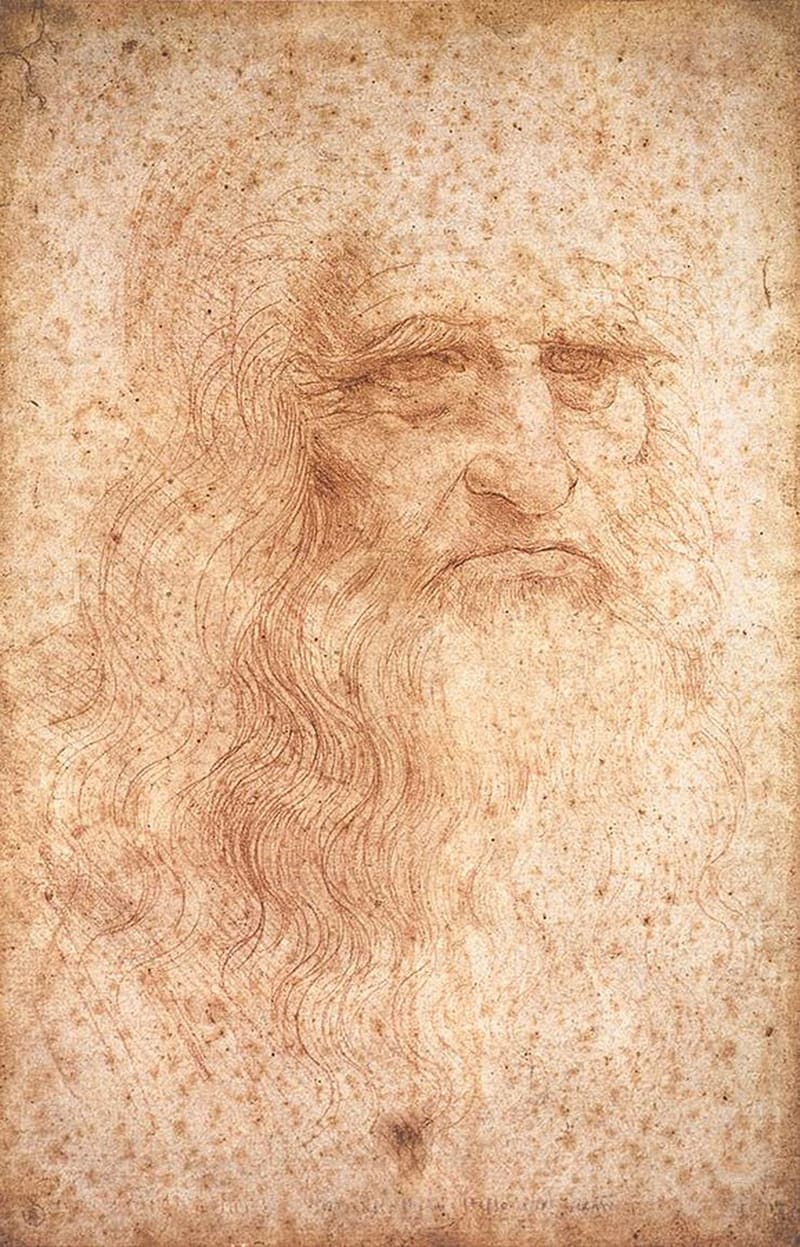
- Born
- April 15, 1452, Vinci, Republic of Florence
- Died
- May 2, 1519, Amboise, France
- Nationality
- Italian
- Movement
- Renaissance
- Mediums
- Oil painting
Early life and training
Leonardo was born on 15 April 1452 near the Tuscan town of Vinci, the illegitimate son of a notary, Ser Piero, and a young woman named Caterina. As a teenager he was apprenticed in Florence to Andrea del Verrocchio, a leading sculptor and painter, whose workshop taught everything from metalwork to painting. According to Giorgio Vasari, the angel Leonardo painted in Verrocchio’s Baptism of Christ was so fine that his master gave up painting.
Milan and The Last Supper
Around 1482 Leonardo moved to Milan to work for its ruler, Ludovico Sforza, presenting himself as much as an engineer as an artist. Over nearly two decades there he designed festivals and fortifications, planned a giant bronze horse that was never cast, and filled notebooks with studies.
His great work in Milan is The Last Supper (about 1495 to 1498), painted on the wall of the refectory of Santa Maria delle Grazie. It captures the moment after Christ announces that one of the apostles will betray him, with each figure reacting in a different way. Because Leonardo used an experimental technique on dry plaster rather than true fresco, the painting began to deteriorate almost at once.
The Mona Lisa and later years
Back in Florence, around 1503, Leonardo began a portrait of Lisa Gherardini, wife of a silk merchant. He never delivered it, carrying the Mona Lisa with him and reworking it for years. Its soft transitions of light and shadow, a technique called sfumato, and the sitter’s ambiguous smile made it the most famous painting in the world.
He spent his final years in France as a guest of King Francis I, living at the manor of Clos Lucé near Amboise, where he died on 2 May 1519.
The notebooks
More than 7,000 pages of Leonardo’s notes and drawings survive, written in his characteristic mirror script. They cover anatomy, based on his own dissections, along with flight, water, optics, botany, geology and designs for machines from flying devices to armored vehicles. The Vitruvian Man (about 1490), a study of the ideal proportions of the human body, comes from these papers. Few of his inventions were built, but his drawings show a mind that treated art and science as a single way of understanding the world.
Legacy
Leonardo left a small body of finished work, but his ideas about composition, light and anatomy shaped the High Renaissance, and painters including Raphael learned directly from him. He has become the model of the “Renaissance man,” equally at home in art, science and engineering.
Frequently asked questions
How many paintings did Leonardo da Vinci make?
Fewer than twenty surviving paintings are generally accepted as his, and scholars still argue over several of them. He worked slowly, experimented with techniques that sometimes failed, and left many projects unfinished.
Where is the Mona Lisa?
In the Louvre in Paris. Leonardo kept it with him until his death in France, and it entered the French royal collection. It was stolen from the Louvre in 1911 and recovered in Florence in 1913.
Why is The Last Supper so damaged?
Leonardo painted it in tempera and oil on a dry plaster wall instead of using true fresco, so he could work slowly. The paint began flaking within his lifetime, and the wall has needed repeated restoration ever since.