Artist · Italian
Caravaggio: Life, Paintings and Legacy
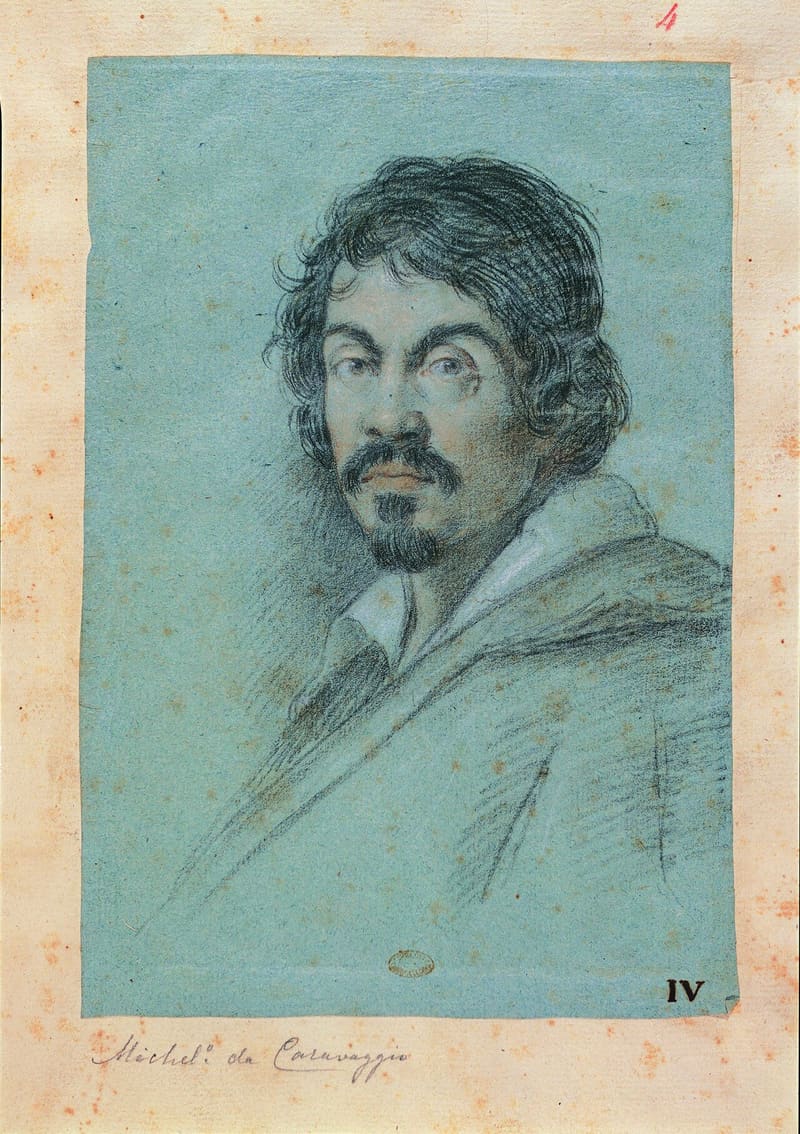
- Born
- September 29, 1571, Milan, Italy
- Died
- July 18, 1610, Porto Ercole, Italy
- Nationality
- Italian
- Movement
- Baroque
- Mediums
- Oil painting
Early life and training
Michelangelo Merisi was born in Milan in 1571, probably on 29 September, the feast of the archangel Michael, and grew up partly in the small town of Caravaggio, which gave him the name he is known by. Plague killed his father when he was a child. At 13 he was apprenticed to the Milanese painter Simone Peterzano, and in the early 1590s he moved to Rome.
Success in Rome
In Rome he first painted still lifes and half-length figures of boys and musicians, with an unsettling realism. His break came when the art-loving Cardinal Francesco Maria del Monte took him into his household. In 1599–1600 he painted his first public commission, scenes from the life of Saint Matthew for the Contarelli Chapel in the church of San Luigi dei Francesi. In The Calling of Saint Matthew Christ enters a dim tax office, and a beam of light falls across the table where Matthew sits counting coins, singling him out.
Light, shadow and real people
Caravaggio’s method was startlingly direct. He seems to have painted straight onto the canvas from live models, without the preparatory drawings other artists relied on, and he used ordinary Romans, with dirty feet and worn faces, as saints and apostles. He lit them with a hard light from one side against near-black backgrounds, a style called tenebrism (from the Italian for “darkness”). Some patrons rejected his altarpieces as indecent; others competed to buy them. The story of one rejected work is told in Paintings That Caused Scandals.
Violence and exile
Caravaggio was as famous for his temper as for his painting. Police records in Rome list arrests for brawls, carrying weapons and insulting officers. In May 1606 he killed Ranuccio Tomassoni in a fight and fled the city under a death sentence. He worked in Naples, then in Malta, where he was made a Knight of the Order of Saint John, then expelled after another violent incident. He moved on to Sicily and back to Naples, where he was badly wounded in an attack. He died at Porto Ercole in July 1610, aged 38, on his way back to Rome in hope of a pardon.
Legacy
Within a few years of his death, followers known as the Caravaggisti were spreading his style across Italy, Spain, France and the Netherlands, where it helped shape the art of Rembrandt. He is one of the founders of the Baroque. Then his reputation faded, and he was dismissed for centuries as crude. A landmark exhibition in Milan in 1951 restored him to the front rank, and he is now one of the most popular old masters.
Frequently asked questions
What was Caravaggio's real name?
Michelangelo Merisi. 'Caravaggio' is the name of the small town near Milan where his family came from.
Why is Caravaggio important?
He replaced idealized religious painting with real-looking people lit by dramatic light against deep shadow, a style called tenebrism. Painters all over Europe copied him, and his approach shaped the Baroque.
Did Caravaggio kill someone?
Yes. In May 1606 he killed a man named Ranuccio Tomassoni in a fight in Rome. Sentenced to death, he spent the rest of his life on the run, in Naples, Malta and Sicily.
How did Caravaggio die?
He died at Porto Ercole, on the Tuscan coast, on 18 July 1610, aged 38, while traveling back toward Rome in hope of a papal pardon. The exact cause is unknown; fever is the most common explanation.