Art movement · c. 1600–1750
Baroque Art: History, Artists and Key Works
What is Baroque art?
Baroque is the dominant style of European art from about 1600 to 1750. Where the Renaissance sought balance and calm, Baroque art goes for drama. Figures twist and lunge across the picture on strong diagonals, light falls in hard beams out of deep darkness, and painting, sculpture and architecture combine to sweep the viewer up in a single overwhelming effect.
It was an art of persuasion. In Catholic countries it served a Church determined to win back believers. In royal courts it glorified kings. In the Protestant Dutch Republic it took a quieter form, painting the portraits, interiors and still lifes that a new middle class wanted on its walls.
Origins in 1600s Rome
The Baroque began in Rome around 1600, in the wake of the Counter-Reformation. Responding to the Protestant Reformation, the Council of Trent (1545 to 1563) called for religious art that was clear, direct and emotionally moving, art that would make ordinary worshippers feel the stories of the faith.
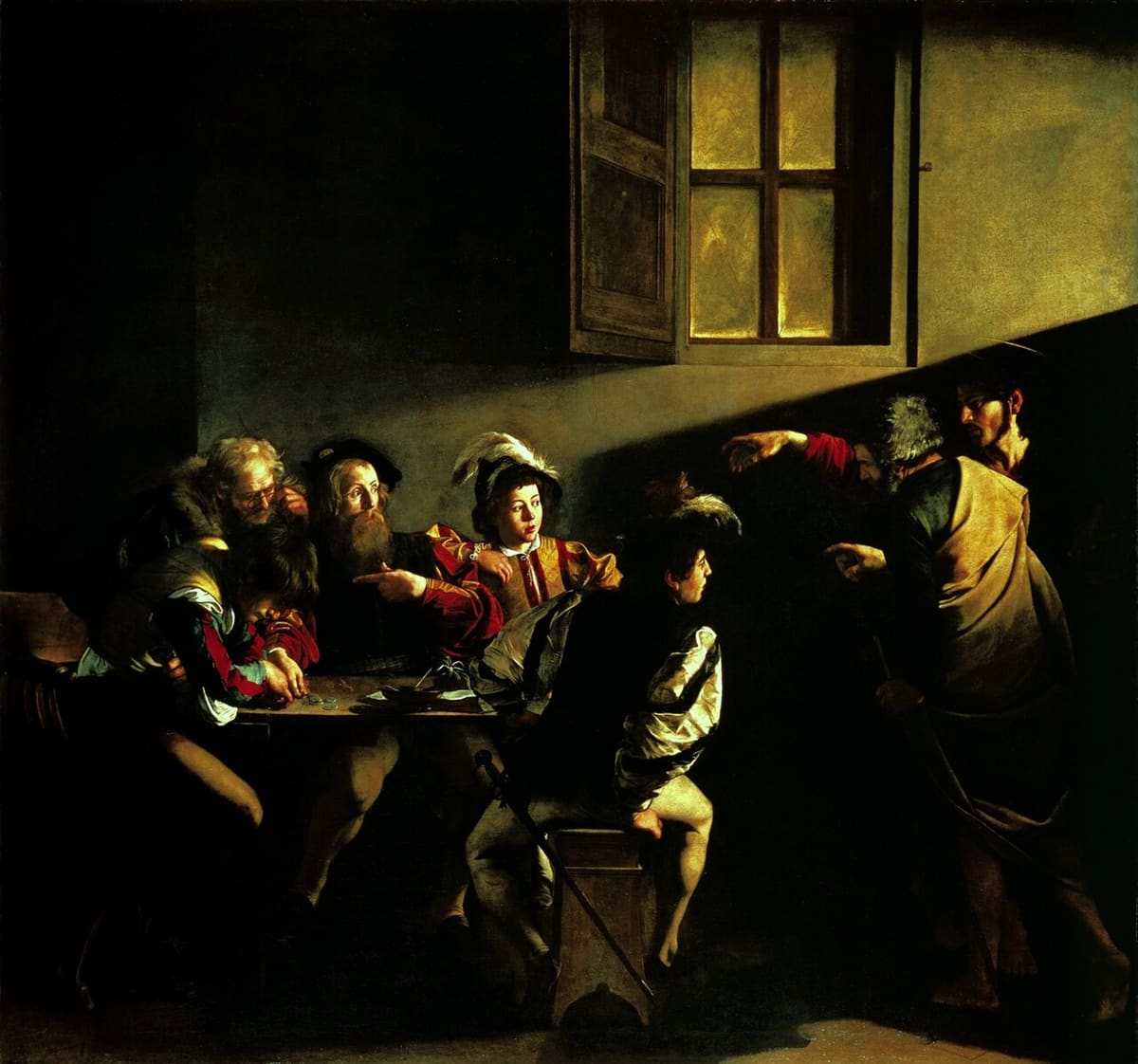
Caravaggio answered that call more forcefully than anyone. In The Calling of Saint Matthew (1599 to 1600), painted for a chapel in the church of San Luigi dei Francesi, Christ appears in a shabby tax office full of men in contemporary clothes, and a single shaft of light cuts through the gloom to pick out the moment of conversion. His use of real people as models and his violent contrasts of light and dark, known as tenebrism, were copied across Europe. Artemisia Gentileschi took his approach further in powerful scenes such as Judith Slaying Holofernes.
In sculpture and architecture, Gian Lorenzo Bernini defined Roman Baroque. His Ecstasy of Saint Teresa (1647 to 1652) stages a mystical vision like a scene in a theater, complete with hidden lighting. He also designed the great colonnade embracing the square in front of St. Peter’s.
The Baroque across Europe
In Flanders, Peter Paul Rubens painted huge, energetic canvases full of muscular bodies and swirling color for churches and courts across Europe. In Spain, Diego Velázquez served as court painter to Philip IV and painted Las Meninas (1656), one of the most discussed paintings in history.
The Dutch Republic, Protestant and commercial, had little use for altarpieces. Its painters worked for an open market of merchants and townspeople, producing portraits, landscapes, still lifes and everyday scenes. Rembrandt brought Baroque light and shadow to group portraits such as The Night Watch (1642), Frans Hals painted with dazzling loose brushwork, and Johannes Vermeer painted quiet interiors filled with soft daylight.
Key characteristics
Dramatic light
Strong contrasts of light and shadow (chiaroscuro, pushed to extremes as tenebrism) model figures and focus attention on the key moment.
Movement and diagonals
Compositions are built on diagonals and spirals instead of stable triangles, so figures seem caught in mid-action.
Emotion and immediacy
Saints suffer, martyrs bleed and ordinary people stand next to the holy figures. The viewer is meant to feel the scene, not just admire it.
Grandeur and unity of the arts
Ceilings dissolve into painted heavens, and sculpture, painting and architecture are designed together as one theatrical whole.
Baroque vs Rococo
By the early 18th century, especially in France, the heavy grandeur of the Baroque softened into the Rococo: lighter colors, playful curves, intimate scenes of aristocratic leisure, and decoration for salons rather than churches.
Major Baroque artists
- Rembrandt · 1606–1669
Before and after Baroque
- Came before: Renaissance (c. 1400–1600)
- Came before: Mannerism (c. 1520–1600)
- Came after: Rococo (c. 1720–1780)
Mediums and era
- Medium: Oil painting
Frequently asked questions
What does Baroque mean?
The word probably comes from the Portuguese 'barroco', an irregularly shaped pearl. 18th-century critics used it as an insult for art they found overblown and bizarre; only in the 19th century did it become a neutral name for the style.
When was the Baroque period?
From about 1600 to 1750. It began in Rome, spread across Catholic and Protestant Europe and Latin America, and gave way to the lighter Rococo style in the early 18th century.
What is the difference between Renaissance and Baroque art?
Renaissance art favors balance, calm and clarity. Baroque art favors drama: strong diagonals, sharp contrasts of light and shadow, figures in motion and intense emotion, all designed to draw the viewer in.
Who are the most famous Baroque artists?
Caravaggio, Artemisia Gentileschi and Gian Lorenzo Bernini in Italy; Peter Paul Rubens in Flanders; Diego Velázquez in Spain; and Rembrandt, Johannes Vermeer and Frans Hals in the Dutch Republic.