Artist · German
Caspar David Friedrich: Life, Paintings and Legacy
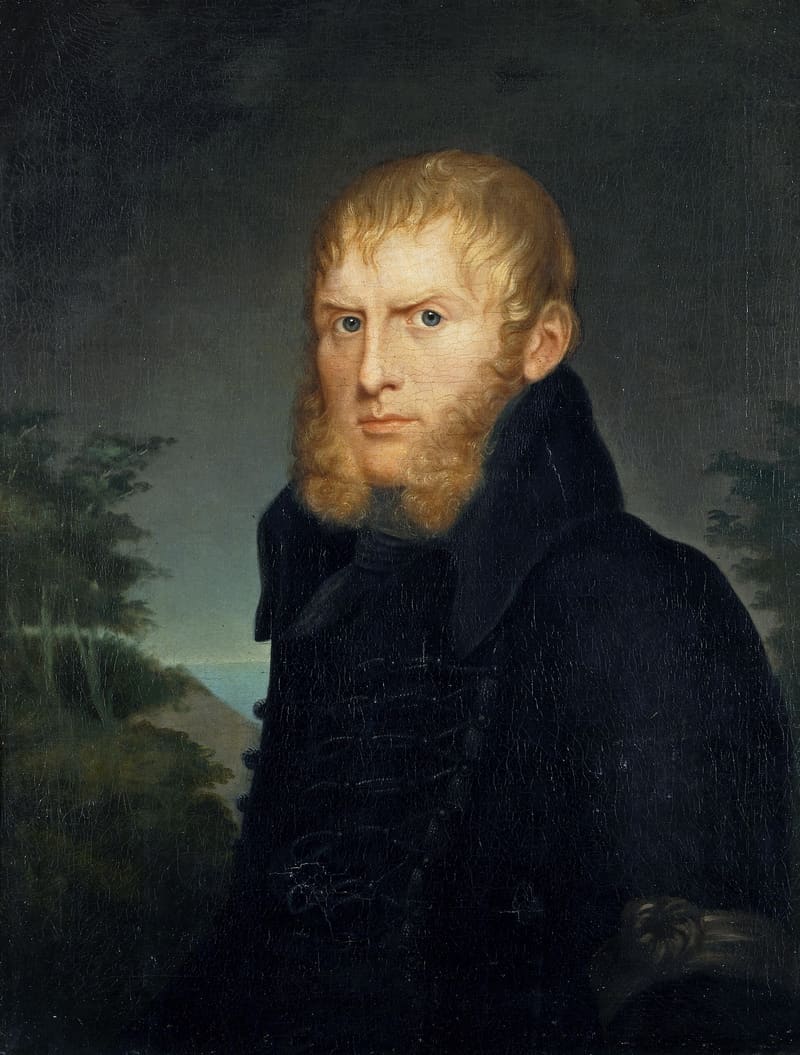
- Born
- September 5, 1774, Greifswald, Swedish Pomerania (now Germany)
- Died
- May 7, 1840, Dresden, Germany
- Nationality
- German
- Movement
- Romanticism
- Mediums
- Oil painting
- Era
- 19th century
Childhood on the Baltic
Caspar David Friedrich was born on 5 September 1774 in Greifswald, a Baltic port that then belonged to Sweden, the sixth of ten children of a candle and soap maker. His childhood was marked by loss: his mother died when he was seven, and when he was 13 his brother Johann Christoffer drowned after falling through the ice, reportedly while trying to rescue Caspar. Many writers have linked his later preoccupation with death and solitude to these years.
Training and Dresden
After studying at the Copenhagen Academy from 1794 to 1798, Friedrich settled in Dresden, then one of the great art cities of Germany, and lived there for the rest of his life. He began with detailed sepia drawings and only took up oil painting seriously in his thirties. He drew constantly on walking tours, in the mountains and on the island of Rügen in the Baltic, then composed his paintings in the studio from those studies.
Landscapes of feeling
In 1808 his altarpiece The Cross in the Mountains, with a crucifix on a mountaintop instead of a scene from the Bible, set off a public argument about whether landscape could carry religious meaning. Two years later the King of Prussia bought The Monk by the Sea and The Abbey in the Oakwood, and Friedrich was elected to the Berlin Academy.
His best-known painting, Wanderer above the Sea of Fog (c. 1818), shows a man seen from behind, standing on a rocky peak above a sea of mist. Friedrich often placed such figures with their backs to us, so that we share their view. Moonrises, ruined abbeys, shipwrecks in ice and bare trees against the sky recur in his work, always charged with feelings of solitude and the infinite. He is the central painter of German Romanticism.
Later years
By the 1820s tastes had changed, and Friedrich’s work fell out of fashion. In 1835 he suffered a stroke that left him unable to paint in oils, and he worked mainly in sepia and watercolor until his death in Dresden on 7 May 1840, largely forgotten.
Rediscovery
An exhibition in Berlin in 1906 brought his paintings back into view, and in the 20th century he was recognized as one of the greatest landscape painters of his age. His influence can be traced in Symbolist painting, in the vast quiet canvases of artists like Mark Rothko, and in countless film and book images of a lone figure facing a vast landscape.
Works by Caspar David Friedrich
- Wanderer above the Sea of Fog · c. 1818
Frequently asked questions
What is Caspar David Friedrich's most famous painting?
Wanderer above the Sea of Fog (c. 1818), showing a man seen from behind on a rocky summit, looking out over a landscape of mist. It is in the Hamburger Kunsthalle in Hamburg.
Why do Friedrich's figures have their backs to us?
The figure seen from behind, called a Rückenfigur in German, invites us to stand where they stand and share their view and feelings. It became one of Friedrich's signatures.
What movement was Caspar David Friedrich part of?
Romanticism. He is the leading painter of German Romanticism, using landscape to express spiritual feeling, solitude and the power of nature.